
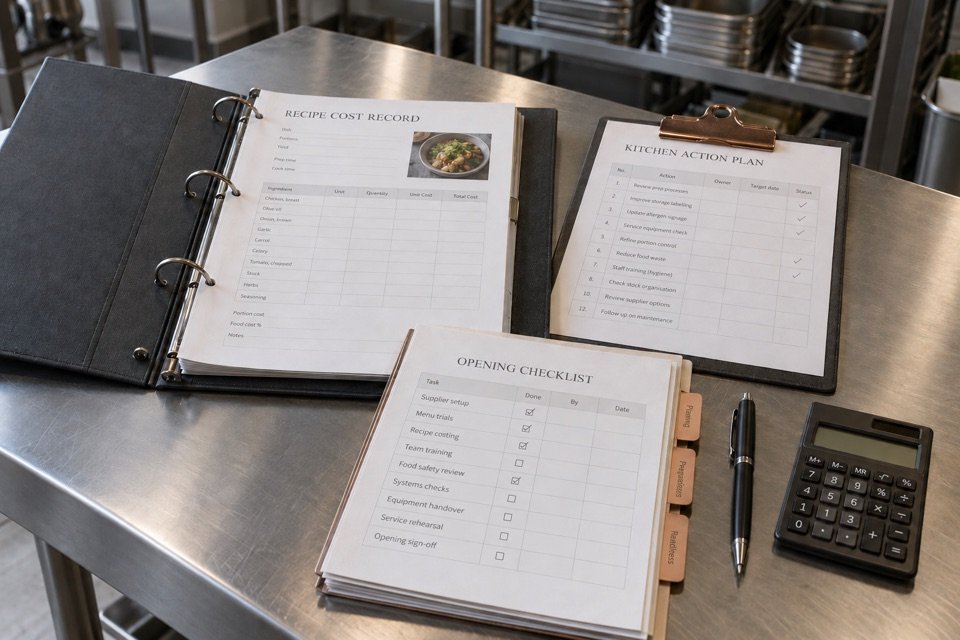
Start with what is happening in the operation. A food cost concern, a production delay and a change of menu will each need different information.
Describe the problem
Write down what you have observed, when it happens and who it affects. Distinguish the observation from a possible explanation. A delay at service, for example, might involve preparation, equipment, staffing or the way orders reach the kitchen.
Gather the relevant records
Depending on the review, these may include:
- Menus, recipes, portion standards and ingredient specifications.
- Purchasing, receiving, stock, waste and sales records.
- Kitchen layouts, production schedules and dispatch records.
- Team roles, shift patterns and existing procedures.
- HACCP plans, allergen records, SOPs and inspection findings if food safety is part of the review.
Include the dates covered and note any missing information. Arrange how confidential records will be shared before sending them.
If food costs are the concern
Choose a period that has usable purchase, stock and sales records. Check that opening and closing stock counts, transfers and supplier credits belong to that same period. A stock-count error can make food use look higher or lower than it was.
Bring current recipe quantities, purchase units, prices and usable yields. A pack price alone does not establish the cost of a portion. Note substitutions, unrecorded waste, staff meals and changes to serving size so they can be checked against the records.
These records support a menu engineering and food cost review. The review should establish which figures are reliable before setting a savings target.
For a cloud kitchen audit
Separate order records by brand where possible. Record when an order arrives, when preparation starts, when it is ready and when it leaves the kitchen. Include cancellations, complaints and busy periods. These records help distinguish a preparation delay from a packing or collection problem.
Map shared equipment and stations against the menus that use them. Include the space needed for packing and completed orders. Read the scope of our cloud kitchen audits before deciding what to include in the brief.
Observe a service, not only the paperwork
Agree access to a service or production period that reflects the problem. Someone familiar with the operation should be available to explain the routines and exceptions. Records show what was entered; observation helps establish how the work happens.
Explain what can change
Budget, space, contracts and trading hours may limit the options. State those limits early. It also helps to identify decisions that have already been made.
Agree what you need from the review
Ask for each finding to identify the observation or record supporting it. The resulting actions should have an owner and a review date. Separate changes the team can introduce from decisions that require investment, technical advice or supplier involvement.
The work may include costed recipes, revised routines or team training. Agree who will use the documents and which operating measures can be checked before and after a change.
Oido Group agrees the scope, access and records needed before an assignment. See our working-document examples for the type of records a review can produce.
Kitchen operations consultancy