
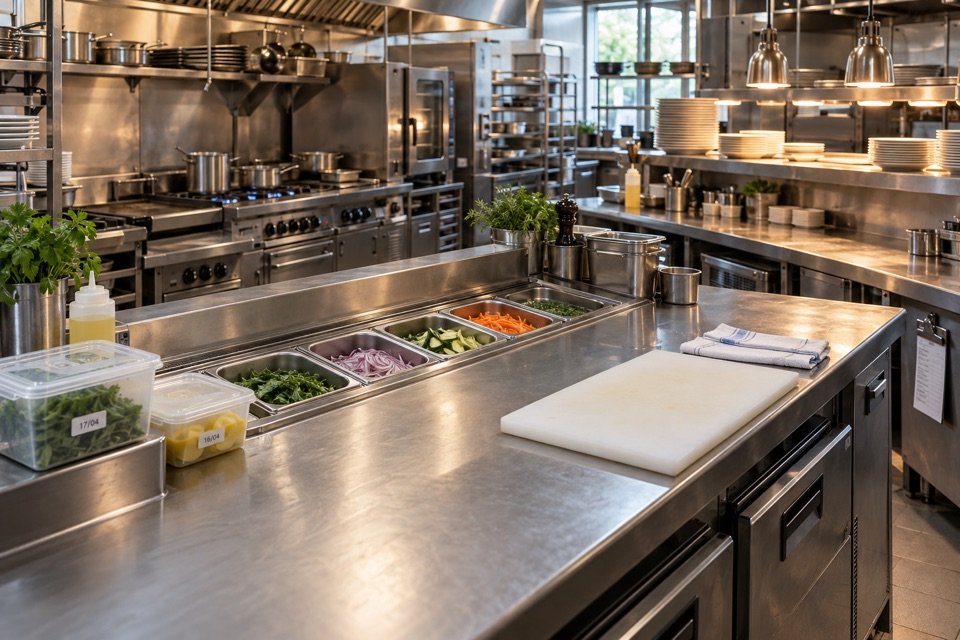
Two brands can each have a sensible menu and still struggle when their orders reach the same fryer at the same time. Looking at each brand separately misses the competition for space, people and equipment.
A cloud kitchen audit should connect the order record with what happens on the floor. It needs to show where an order waits, why it waits and who can change that part of the operation. These five stages provide a useful starting point.
1. Order arrival and routing
Start when the order reaches the business. Check how it is accepted, which station receives it and whether modifications or allergy requests arrive with the rest of the ticket. Look for orders waiting on a tablet, duplicate entry and details lost between systems.
Agree what each timestamp means. A platform's acceptance time may not be the moment cooking begins. Compare system records with observation and use a consistent clock, rather than adding together figures that describe different events.
2. Preparation and release to the stations
An accepted order may wait because a component has not been prepared, the team is searching for stock, or a station has not been told to start. Follow the whole dish, including sauces, garnish and packaging.
Check preparation levels against demand by time of day and brand. The total daily sales forecast can hide a short, concentrated rush. Agree who changes the preparation plan when a promotion, unavailable ingredient or unexpected order pattern changes demand.
Release work with its sequence in mind. Starting the quickest component immediately can leave it waiting for the slowest one. Any change to preparation or holding needs to remain within the operation's food-safety controls.
3. Queues at shared cooking stations
Map which dishes need the same oven, grill, fryer or finishing station. Include the equipment's usable capacity under the actual menu, the time needed between products and the work of loading, checking and unloading it.
If two brands both depend on one oven during the dinner peak, another person at the pass will not add oven capacity. The decision may concern the menu, order scheduling, equipment or preparation method. Observe the queue before choosing.
Also check whether a brand's priority is clear. When cooks switch between whichever ticket is being chased most loudly, an older order can remain unfinished while several newer ones progress.
4. Assembly, checking and packing
A main dish can be ready while the order waits for a side, drink, label or bag. Record the point when each component arrives at packing and when the complete order is ready to leave.
Check whether the packing station can see the full order, identify modifications and confirm the correct items. Look at where packaging is stored and whether the station has enough clear space for simultaneous orders from different brands.
Do not count an incomplete bag as a ready order. That creates a misleading preparation time and transfers the delay to the person dealing with the rider.
5. Ready order to rider handover
Separate the time food is ready from the time the rider arrives and the time the correct bag is handed over. An early rider waiting for cooking and a finished order waiting for a rider are different problems.
Check order identification, the collection point and who owns handover during a rush. Keep waiting orders organised under the required holding conditions. Speed cannot come from skipping food-safety checks or sending an order before it has been checked.
Look at the whole shift, not one late ticket
Choose orders across ordinary and busy periods, and include the brands that share resources. Record what the kitchen was handling at the same time. A single difficult order is useful to investigate, but it cannot establish a pattern on its own.
Review delays alongside missing items, remakes and complaints. A shorter preparation time is not an improvement if it increases errors. Compare like-for-like periods and note changes in order volume and menu mix.
What the audit should leave you with
Ask for a clear account of the delays observed, the evidence behind each finding and the decisions required. Actions should identify an owner and a way to check the result. Equipment purchases and additional staffing should follow a demonstrated need.
Oido's cloud kitchen audit sits within its kitchen operations service, connecting workflow with menu demands, station coverage and operating systems. It is an operational review; it does not replace a food authority's inspection.